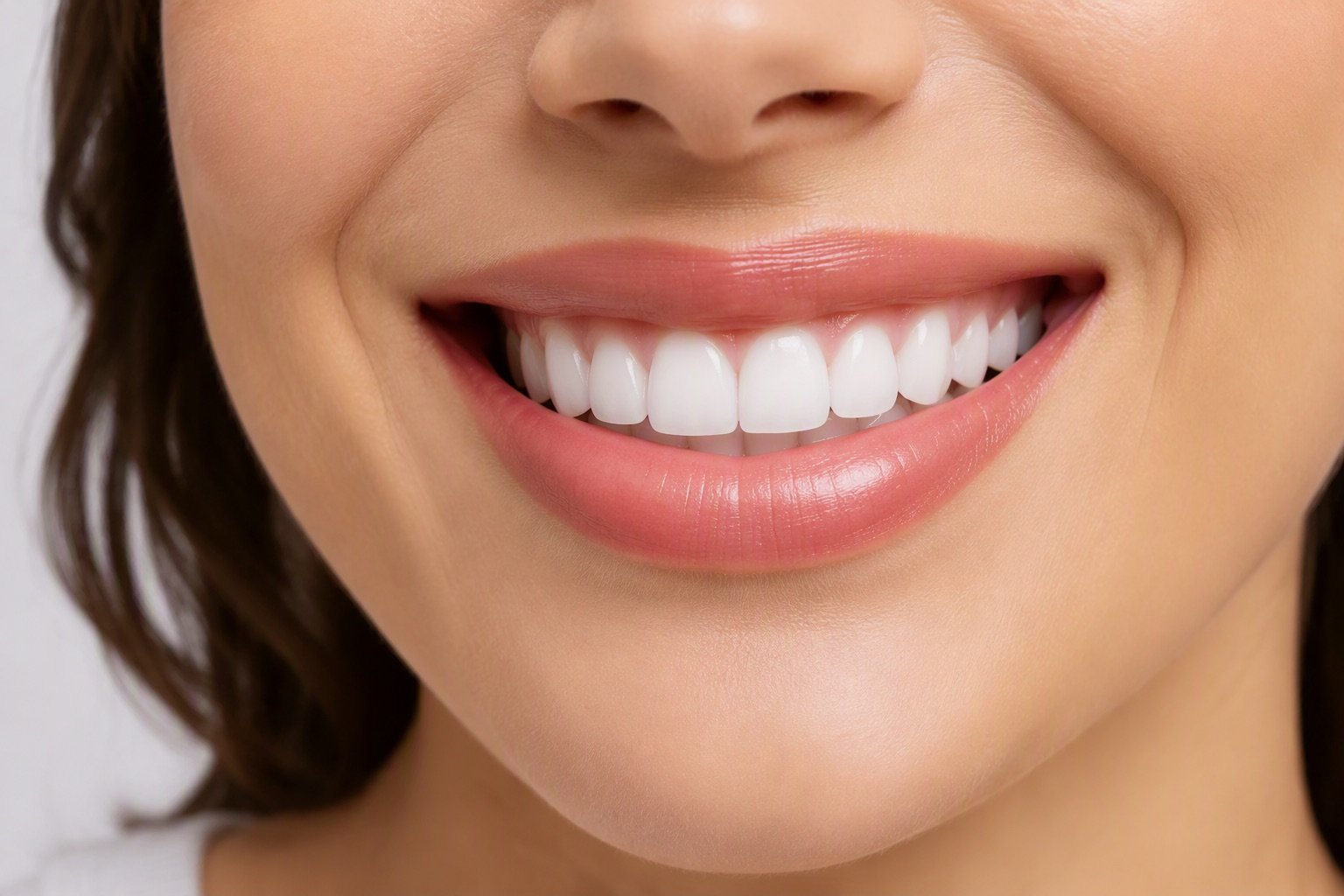
Le E-max. veneers (in lithium disilicate) are thin ceramic sheets that are applied to the front surface of the teeth to correct their shape, color and small misalignments. They are the most requested aesthetic treatment for the smile — and also the one with the most variable prices. Here you find how much do they really cost, when they are indicated and when another solution is better.
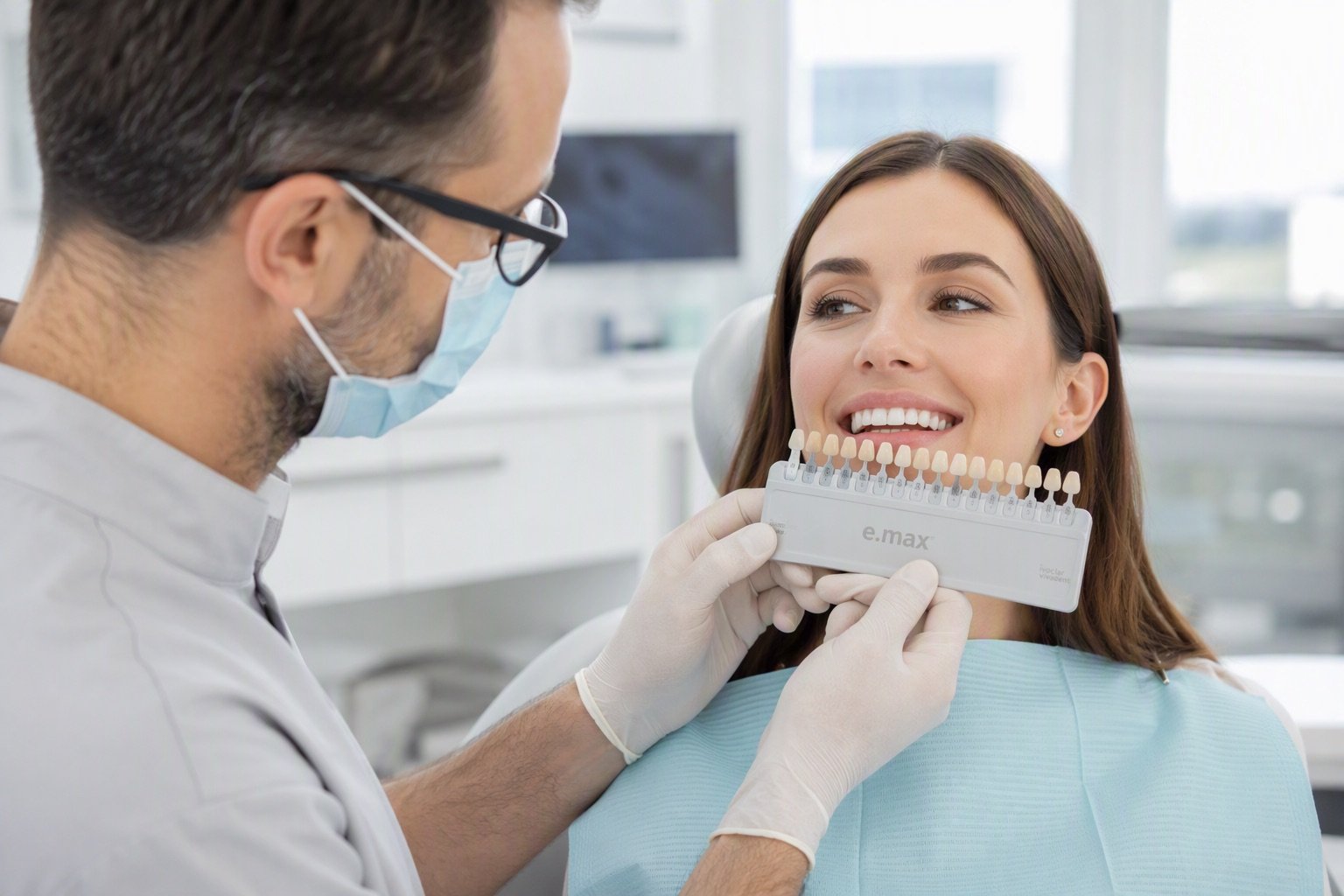
What are E-max veneers
E-max is the commercial name of lithium disilicate, a vitreous ceramic that combines strength (approximately 400-500 MPa) and an aesthetic that no other material equals: translucency, fluorescence and play of light identical to natural enamel. The veneer is a 0.3-0.7 mm "shield" that comes adhesively cemented on the tooth after minimal preparation.
Compared to a crown, the veneer preserves almost all of the natural tooth: it is the ideal choice when the tooth is healthy but unsightly — discolorations due to tetracyclines or fluorosis, conical or worn teeth, diastemas (spaces) to be closed, irregular incisal edges. Find out more on the page E-max. veneers.
How much do they cost: price table
| Solution | Average price in Italy (per item) | From Sanitadental Clinic (by item) |
|---|---|---|
| E-max veneer (lithium disilicate) | €700 – €1.200 | €500 |
| Zirconium veneer | €600 – €1.000 | €350 |
| Composite veneer (direct aesthetics) | €200 – €450 | €280 (with laboratory finishing) |
| Mock-up and smile design | €100 – €300 | included in 4+ element plans |
Italian prices = indicative market averages; our quote is written, signed and blocked for 30 days.
Veneers are almost always done in a group (4-10 elements of the front sector) for uniformity of color and shape: on multiple jobs we apply dedicated conditions, indicated in writing in the estimate.
E-max, zirconium or composite: how to choose
E-max: maximum aesthetics, excellent resistance, duration 10-15 years. The reference choice for the front teeth visible in the smile.
Zirconium: more resistant but less translucent; we use it as a veneer when masking very dark teeth or additional structure is needed, otherwise it is the material for crowns. It costs less (€350) and makes sense in selected cases.
Composite: the most economical and conservative solution, often without tooth preparation; However, it lasts 4-7 years, becomes pigmented and requires more maintenance. Ideal for small corrections, for young patients or as an intermediate solution.
During the aesthetic visit we always show a mock-ups (test the result directly in your mouth) before touching any teeth: see your future smile before deciding.
Phases and times of treatment
The typical route: first visit with photographs, impressions and digital smile design; mock-ups test; preparation minimal of the teeth and definitive impression, with temporary veneers; testing and cementing of the definitive E-max after 3-5 days in the laboratory.
Total: 2-3 appointments in 5-7 days, compatible with a single stay for those arriving from Italy. The internal laboratory allows us to involve the technician in the aesthetic test: color and shape are defined by looking at your face, not from a sent photo. To book the evaluation, write to us from the page contacts.
Because our price is lower
E-max veneers are highly manufactured: in Italy the laboratory invoice for a single veneer can exceed €300-400, and is added to the structural costs of the practice. With the internal laboratory and operating costs in Tirana, the same disilicate block and the same adhesive protocol produce a veneer for €500. No shortcuts on materials: just a shorter supply chain. Furthermore, the expense is tax deductible in Italy.